
MINORCA PHYSIOTHERAPIST. SPECIALTY IN PELVIC FLOOR.
Do you know what the pelvic floor is?
Physiotherapist in Menorca, specialized in pelvic floor. You are interested in the subject if you are pregnant, you just had a baby, you have urine leaks, you feel uncomfortable during sexual practice or you need to improve your body posture, among others.
The pelvic floor is a group of muscles and tissue connective tissue that closes the bony pelvis at its bottom.
The basic functions of the pelvic floor are:
-
Organ support
-
Continence
-
reproductive
-
Position
-
Sexual
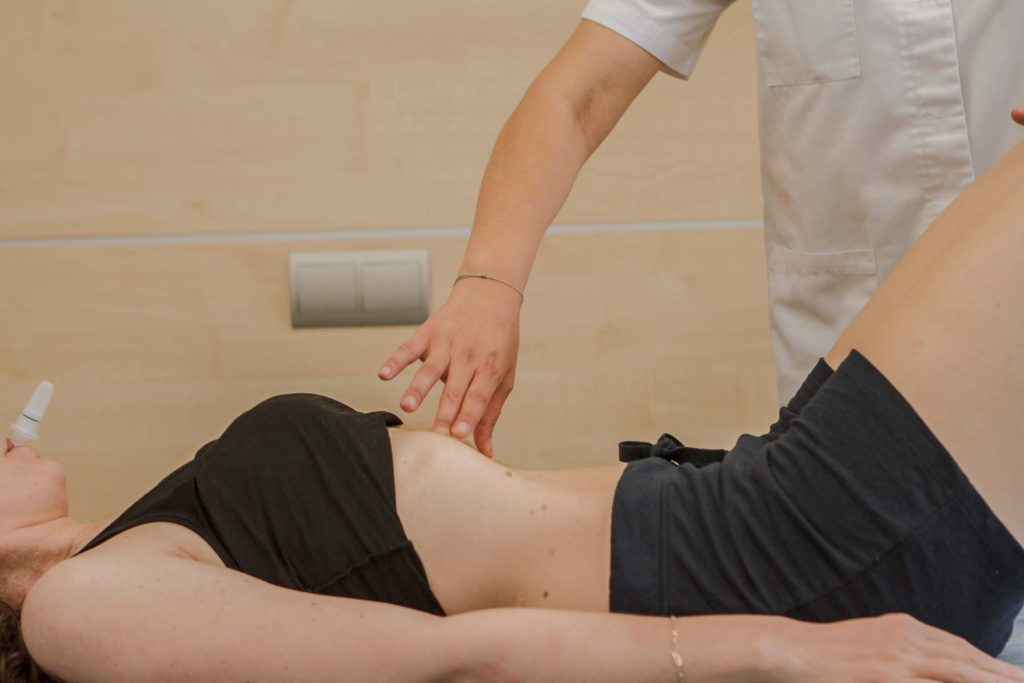
How can we improve your life? Some pathologies that we can treat
Have you ever heard someone say that they pee if they laugh? Well, this can be a sign of stress urinary incontinence. It is the leakage of urine when carrying out a physical activity as demanding as running, but also as daily as standing up. It is usually given by instability or weakness of the structures that control the act of urinating. And no, it doesn’t have to be that way just because of age or having given birth. We know that this condition can seriously affect your quality of life and luckily physiotherapy offers you several treatments to address this problem.
It may happen that the cause of incontinence is not as clear as it is in the case of stress incontinence. In urge and mixed incontinence, many more factors play a determining role in the problem. Even so, each case is unique and after an exhaustive evaluation we will present you with all the treatment options that we can offer you.
Nobody doubts that giving birth is practically a miracle of nature, but we cannot ignore that it can also be a trauma to the pelvic floor. The important thing is not to allow this situation to tarnish your happiness. That is why we offer you assessments and postpartum treatments, to prevent or treat any injury that your perineal area has suffered.
Ano-rectal disorders may be related to constipation, pain, or stool retention, or, on the contrary, related to loose stools, urgency, and incontinence. For the people who suffer from them, the repercussions are very great at all levels: social life, self-esteem, professional… However, it is a subject that is hidden without knowing that there is a real possibility of functional re-education treatment.
Did you know that chronic pelvic pain often stems from excessive tension in the pelvic floor muscles? We offer you various techniques to reduce this tension and thereby relieve pain. They can affect gynecological, gastrointestinal, neurological, genitourinary or musculoskeletal factors and it is important to find the specific cause that triggers the pain, since only after an adequate diagnosis can we find the ideal treatment for you.
Postpartum, coloproctological surgeries, abdominal distension or the habits of pushing when defecating are risk factors that can lead to constipation. With the application of cognitive techniques, nutritional advice, relaxation therapy, correct straining when defecating, retraining of the pelvic floor muscles with biofeedback, the rectal balloon technique or manual techniques, we can help you remedy these annoying symptoms.
It is a surgical intervention whose scar could cause adhesions and movement restrictions, and it is advisable to treat it as soon as possible to avoid the appearance of other sequelae that could cause abdominal, pelvic, lumbar or perineal pain.
Physiotherapy during pregnancy focuses, on the one hand, on enhancing aspects such as control, mobility and flexibility of the pelvis to favor the biomechanics of the fitting, expulsive and delivery phases and, on the other hand, improving toning, control and strengthening of the abdominal and pelvic floor muscles.
It is the cut that is made in the expulsive phase of labor with the aim of avoiding uncontrolled tears in the perineum of the woman and thus facilitating the delivery of the baby. Perineal massage during pregnancy is a very useful and effective technique to prevent an intervention such as episiotomy to some extent.
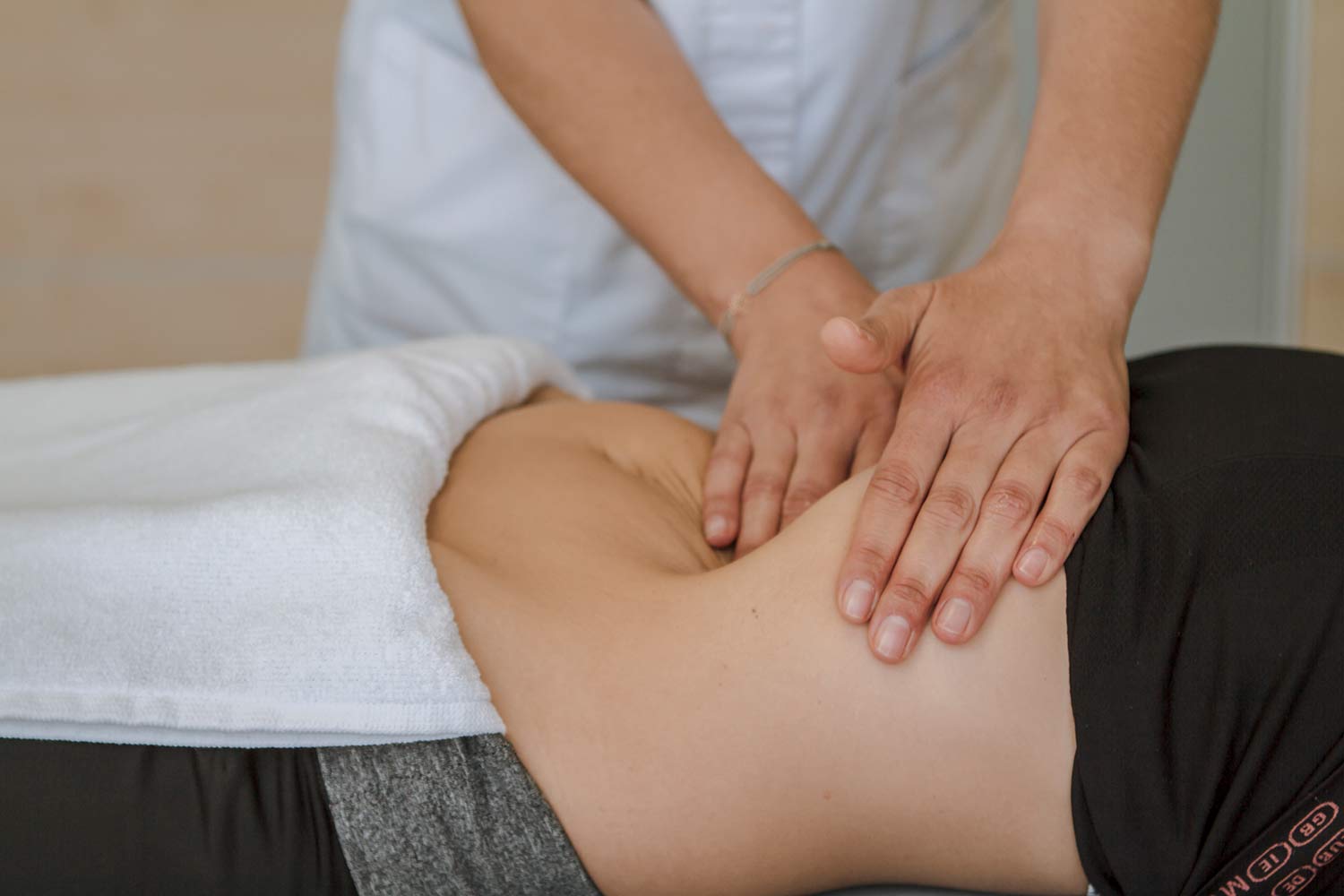
The health of the pelvic floor implies the physical and functional integrity of the entire anatomical complex during the different stages of the individual's life.

TREATMENTS
It is a work system that uses manometry or electromyography to re-educate both the muscles of the abdominal area and the muscles of the pelvic floor. Through specific sensors, this system detects muscle contraction and represents the results visually on a screen where it will make it easier for you to control and learn the exercises. State-of-the-art software makes the work of activating these little-known muscles easier to learn. It is a very dynamic, playful and motivating system that accelerates the recovery and learning process.
Electrotherapy helps to strengthen very weak pelvic floor muscles and also in the treatment of urinary or fecal incontinence. Electrostimulation will make your pelvic floor contract and increase your perception and awareness of pelvic muscle activity through a vaginal or anal probe or through surface electrodes connected to the electrostimulation equipment.
Childbirth is a very special moment, but at the same time it can be traumatic for your pelvic floor, since sometimes the obstetrician considers it necessary to resort to an episiotomy to facilitate the baby’s exit and avoid a tear. You can prepare your perineum for that moment, approximately from week 34 we can perform perineal massage and perform elasticity exercises for the pelvic floor and the birth canal to try to avoid injury to this area. If everything goes well, as in the vast majority, your perineum will adapt correctly to the effort and without being injured during the birth of your baby.
It is a treatment technique used in painful, inflammatory processes, adhesions and fibrotic tissues due to its defibrosing capacity, therefore any scar such as cesarean section or fibrosis as in Peyronie’s disease, can be treated with this technique as a complement to other interventions. therapeutic.
We also use manual techniques to help you remedy these annoying symptoms. As their name indicates, they are specific techniques in which the main tool is the hands. It is used to evaluate, mobilize and treat any alteration associated with the pelvic floor.
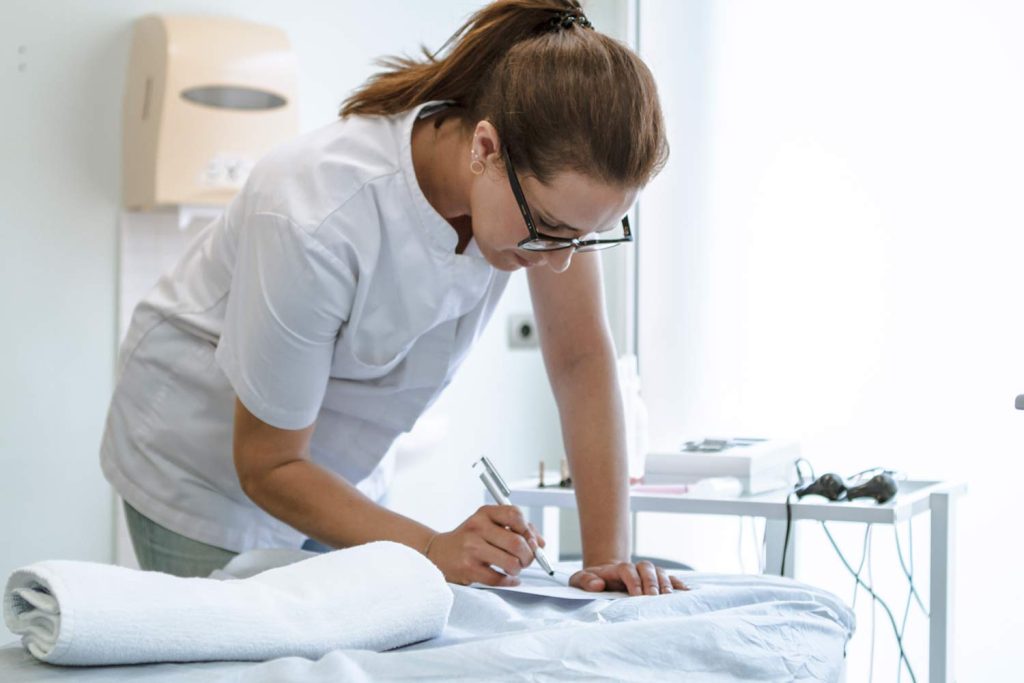
I'm Sara Clar
Graduated in physiotherapy from the University of the Balearic Islands, postgraduate in manual therapy and specialized in urogynecological physiotherapy.
The reason why I decided to specialize in this branch was because when I needed to look for alternatives to surgery and be a pelvic floor patient, I had no options. I had to move to the peninsula to receive pelvic floor rehabilitation. At that moment I realized the great emptiness of this specialty in the treatment of postpartum women and urogynecology in general.
On the other hand, during my specialized training I had the opportunity to do a stage at a renowned pelvic floor clinic in Paris where great professionals advised me and who just gave me the motivation to start this project, which I am happy to have carried out.
It is a booming specialty but it still has a long way to go to get out of the taboo regarding what this specialty entails and especially in a small place like Menorca.
My constant desire to learn and dedicate myself to a not so well-known area has pushed me to continue in constant training and growth to give the best of myself to my patients.